Football Locker Room Design: Complete Planning Guide for Athletic Directors
Let me tell you about the best football locker room design I’ve ever seen. It wasn’t at Alabama or Ohio State or any of those powerhouse programs. It was at a Division II school in the Midwest that most people have never heard of.
What made it special? The coach there understood something that a lot of programs miss: your locker room isn’t just where players store their gear. It’s where team culture gets built. It’s where recruits form their first impression of your program. It’s where your players spend hours every week, and those hours matter.
After 30+ years designing locker facilities for football programs at every level—from small Division III schools to NFL teams—we’ve learned what separates great football locker room design from good ones. It’s not about spending the most money. It’s about making smart decisions: proper equipment storage, strategic space planning, team branding that actually means something, and lockers built to last.
This guide is everything we’ve learned about football locker room design that actually works. Whether you’re renovating an existing space or building something new, we’ll walk you through the decisions that matter and help you avoid the mistakes we’ve seen programs make over and over again.
Key Takeaways
- Football lockers require 24″ minimum width to accommodate helmets, shoulder pads, and multiple uniforms
- Proper ventilation is critical for equipment drying and athlete comfort in high-humidity environments
- Team branding and player names create recruiting impact and build team culture
- Custom wood lockers deliver 15-20+ year lifespan, making them more cost-effective than metal alternatives
- Professional locker room design directly impacts recruiting success and program reputation
Quick Navigation
- Introduction: The Foundation of Team Culture
- Football Equipment Storage Requirements
- Space Planning & Layout Design
- Locker Specifications & Dimensions
- Ventilation & Environmental Considerations
- Team Branding & Customization
- Player Names & Personalization
- Lighting & Electrical Requirements
- Security & Lock Systems
- Recruiting Impact & Facility Value
- Design Process & Timeline
- Budget Planning & Cost Considerations
- Common Design Mistakes to Avoid
- Getting Started: Your Next Steps
- Frequently Asked Questions
Why Your Football Locker Room Matters More Than You Think
I remember walking into a locker room at a Division I program a few years ago. The head coach was giving me a tour, and he stopped at one of the lockers, opened it up, and said, “This is where our culture lives.”
I thought he was being dramatic. However, the more time I spent in that locker room, the more I understood what he meant. Players were hanging out there before practice, after practice, between classes. It wasn’t just storage—it was their space. Additionally, the way that space was designed, the way it felt, the way it looked—it all mattered.
That’s what we’ve learned over 30+ years designing locker facilities for football programs: the locker room is where your program’s identity gets reinforced every single day. It’s where recruits walk in during official visits and either think “this program is serious” or “this feels like high school.” Furthermore, it’s where your players spend hours every week, and those hours add up.
This guide is everything we know about football locker room design that actually works. We’ll talk about equipment storage (football has more gear than any other sport), space planning (you need room for 100+ players and all their stuff), ventilation (wet equipment is a real problem), team branding (it matters more than you think), and how to make decisions that serve your program for 15-20+ years.
Whether you’re renovating an existing facility or starting from scratch, we’ll walk you through what actually matters in football locker room design—and help you avoid the expensive mistakes we’ve seen programs make. According to the NCAA, facilities play a crucial role in recruiting and athlete satisfaction.
Football Equipment Storage Requirements
Football Equipment: It’s a Lot of Stuff
Let me be honest: football players have way more equipment than any other sport. Additionally, it’s all bulky, heavy, and needs to be stored properly. If you don’t plan for it, you’ll end up with lockers that don’t work.
Here’s what a typical football player needs to store:
Helmets: These things are expensive (we’re talking $300-$500 each), and they need to be stored carefully. You can’t just throw them in a locker and hope for the best. They need secure, ventilated storage that protects the integrity of the helmet. No crushing, no deformation, no moisture buildup. We design dedicated helmet shelves with proper ventilation—high enough that they’re protected, but easy enough to access that players aren’t struggling every day.
Shoulder Pads: These are huge. Like, really huge. A standard shoulder pad is about 20-22 inches wide, and you need room to get it in and out without wrestling with it. That’s why football lockers need to be at least 24 inches wide—preferably 30 inches if you’ve got the space. We’ve seen programs try to squeeze shoulder pads into 18-inch lockers, and it’s a disaster. Players end up damaging the pads, or worse, damaging the lockers trying to force things in.
Cleats: Most football players have 3-4 pairs. Game cleats, practice cleats, turf cleats, maybe indoor cleats. Furthermore, here’s the thing about cleats: they get wet, they get muddy, and they stink if you don’t store them properly. That’s why ventilation matters. Our lockers have ventilated shoe compartments that let air circulate, preventing that locker room smell and keeping cleats from getting moldy.
Uniforms: Home uniforms, away uniforms, alternate uniforms, practice uniforms—football players have a lot of uniforms. Moreover, they need proper hanging space so they don’t get wrinkled. Nothing looks worse than a wrinkled uniform on game day. We design lockers with integrated hanging rods and enough space to hang multiple uniform sets properly.
Protective Gear: Knee pads, elbow pads, gloves, sometimes rib protectors. All of this needs organized storage. We include multiple compartments and organizers so players can actually find their gear when they need it. Nothing’s worse than a player frantically searching for a knee pad five minutes before practice.
The key is understanding that football equipment isn’t like basketball or baseball equipment. It’s bigger, bulkier, and there’s more of it. Therefore, your locker design needs to account for that, or you’ll end up with frustrated players and damaged equipment.
Equipment Organization Systems for Football Locker Room Design
Effective football locker room design includes organization systems that help players manage extensive equipment:
Modular Compartments: Adjustable shelves and dividers allow customization for different equipment types and player preferences.
Ventilated Drawers: Specialized drawers with ventilation for wet equipment drying after practice or games.
Hanging Systems: Integrated hanging rods and hooks for uniforms, practice gear, and equipment bags.
Personal Item Storage: Secure compartments for phones, wallets, keys, and other personal items.
Our custom football lockers combine these organization systems to create comprehensive storage solutions that accommodate all equipment types while maintaining organization and accessibility.

Football Locker Room Design: Space Planning & Layout
Locker Room Layout Considerations
Effective football locker room design requires careful space planning to maximize functionality, safety, and team culture. Key considerations include:
Locker Spacing:
- Minimum 24″ width per locker (to accommodate shoulder pads)
- 36″ clearance between locker rows (for equipment access and movement)
- Adequate aisle width for team movement (48″ minimum)
- ADA-compliant spacing for accessible lockers
Traffic Flow:
- Clear pathways from entrance to lockers
- Efficient routes to equipment areas
- Separation of wet and dry areas
- Emergency egress routes
Team Zones:
- Position group organization (quarterbacks, linemen, etc.)
- Seniority or leadership areas
- Rookie or new player sections
- Coaching staff areas
Why Space Planning Matters in Football Locker Room Design
Proper space planning ensures your football locker room design accommodates all players comfortably. Additionally, it prevents bottlenecks during busy times. Furthermore, well-planned layouts improve safety and team flow. Many programs underestimate space needs, leading to cramped facilities that frustrate players and coaches.
Our free custom design consultation includes space planning and layout design to optimize your facility’s functionality and team culture.
Locker Room Size Calculations
Determining appropriate locker room size requires understanding space requirements:
Per-Locker Space Requirements:
- Locker width: 24″ minimum (30″ recommended for premium facilities)
- Locker depth: 24″ standard (30″ for enhanced storage)
- Locker height: 72″ standard (84″ for tall lockers)
- Aisle space: 36″ minimum between rows
Total Space Calculation Example (100 Lockers):
- Locker row width: 24″ × 10 lockers = 240″ (20 feet)
- Aisle width: 36″ (3 feet)
- Total width per row pair: 20′ + 3′ + 20′ = 43 feet
- Locker depth: 24″ (2 feet)
- Total length: Depends on number of rows
Our design team calculates exact space requirements based on your roster size, facility constraints, and layout preferences.
Supporting Spaces
Football locker rooms require supporting spaces beyond locker storage:
Equipment Storage Areas: Additional storage for team equipment, spare gear, and maintenance supplies.
Wet Areas: Designated spaces for wet equipment storage and drying, separate from dry storage areas.
Coaching Areas: Spaces for coaching staff lockers and equipment.
Meeting Spaces: Areas for team meetings, film review, and strategy sessions.
Training Integration: Proximity to training rooms, weight rooms, and practice facilities.
Effective locker room design integrates these supporting spaces to create comprehensive facilities that support all program needs.
Football Locker Room Design: Specifications & Dimensions
Standard Football Locker Dimensions
Football lockers require larger dimensions than other sports to accommodate bulky equipment. When planning your football locker room design, these dimensions are critical. Proper sizing ensures your football locker room design accommodates all equipment types:
Width: 24″ minimum (30″ recommended for premium facilities)
- Accommodates shoulder pads comfortably
- Allows multiple uniform sets
- Provides space for equipment organization
Depth: 24″ standard (30″ for enhanced storage)
- Accommodates helmet and equipment depth
- Allows proper equipment organization
- Provides adequate storage capacity
Height: 72″ standard (84″ for tall lockers)
- Accommodates hanging uniforms
- Provides multiple storage levels
- Allows equipment organization
Our custom football lockers can be built to exact dimensions that optimize your space while accommodating all equipment types.
Interior Configuration Options for Football Locker Room Design
Custom football lockers offer various interior configurations to optimize storage in your football locker room design:
Helmet Shelf: Dedicated ventilated shelf at top for helmet storage
Shoulder Pad Compartment: Wide main compartment for shoulder pad storage
Adjustable Shelving: Moveable shelves for equipment organization
Ventilated Drawers: Drawers with ventilation for wet equipment
Hanging Space: Integrated rods for uniform hanging
Personal Item Storage: Secure compartments for valuables
Our design process includes interior configuration optimization to ensure your lockers accommodate all equipment types efficiently.
Material & Construction Specifications
Football lockers require durable construction to withstand heavy use:
Wood Construction: Full 3/4″ birch construction (not particle board or laminate)
- Industrial-grade material designed for athletic facilities
- Resists impacts and heavy use
- Maintains structural integrity over 15-20+ years
Hardware Quality: Heavy-duty hinges, locks, and hardware
- Designed for frequent use
- Resists wear and corrosion
- Easy to maintain and repair
Finish Durability: Professional finishes that resist wear
- Protects against scratches and impacts
- Easy to clean and maintain
- Maintains appearance over years
Our custom wood lockers use industrial-grade materials and construction methods designed specifically for football facility demands.
Ventilation & Environmental Considerations
Ventilation: The Thing Everyone Forgets (Until It’s Too Late)
Here’s a story: We got a call from a program a few years ago. They’d installed new lockers six months earlier, and they were already having problems. Equipment was getting moldy, the locker room smelled terrible, and players were complaining about the humidity.
The problem? They’d focused on everything except ventilation. They’d picked the right lockers, the right colors, the right layout. However, they hadn’t thought about how to get air moving through the space. This is a common oversight in football locker room design.
Football locker rooms are unique because you’ve got wet equipment everywhere. Shoulder pads that are soaked with sweat. Cleats covered in mud. Helmets that are damp inside. All of that moisture needs somewhere to go, or you end up with mold, mildew, and equipment that starts degrading.
Proper ventilation does four things:
- Dries Equipment: Prevents mold and mildew from destroying expensive gear
- Keeps Athletes Comfortable: Reduces that oppressive humidity that makes locker rooms miserable
- Controls Odor: Prevents that locker room smell from taking over the entire facility
- Protects Health: Reduces the risk of bacterial growth and infections
After 30+ years doing this, I can tell you: inadequate ventilation is probably the most common mistake we see in football locker room design. Programs spend all this money on nice lockers, then skimp on ventilation, and six months later they’re calling us asking what went wrong.
Don’t make that mistake. Plan for ventilation from day one. It’s not optional—it’s essential for successful football locker room design.
Ventilation System Requirements for Football Locker Room Design
Effective football locker room design requires comprehensive ventilation systems:
HVAC Integration: Coordination with facility HVAC systems to ensure adequate air circulation
- Minimum 6-8 air changes per hour
- Proper exhaust systems for moisture removal
- Temperature and humidity control
Locker-Level Ventilation: Ventilated compartments within lockers for equipment drying
- Ventilated helmet shelves
- Ventilated shoe compartments
- Ventilated drawers for wet equipment
Space-Level Ventilation: Overall room ventilation for air quality
- Ceiling exhaust fans
- Wall-mounted exhaust systems
- Natural ventilation where possible
Our custom football lockers include ventilated compartments designed specifically for equipment drying, working in conjunction with facility HVAC systems. This integrated approach ensures your football locker room design maintains proper air quality.
Environmental Control in Football Locker Room Design
Football locker rooms require environmental control beyond ventilation:
Temperature Control: Maintain comfortable temperatures for athletes
Humidity Control: Prevent excessive moisture buildup
Air Quality: Ensure fresh air circulation
Moisture Management: Proper drainage and moisture removal systems
Effective football locker room design integrates environmental control systems to create comfortable, healthy facilities that protect equipment and support athletes. Additionally, proper environmental control extends equipment lifespan and improves athlete satisfaction.

Football Locker Room Design: Team Branding & Customization
Team Branding: It’s Not Just Decoration
I used to think team branding was just about making things look nice. Then I saw what happens when you do it right.
We worked with a program that went all-in on branding. Team colors matched exactly to their brand guidelines. Logos routed into the wood (not stickers—actual routed logos). Player names engraved on each locker. The whole works.
When recruits walked in, you could see it on their faces. That “wow” moment. That feeling of “this program is serious.”
But here’s what surprised me: the impact on current players was just as big. They took pride in those lockers. They took care of them. They showed them off to friends and family. The locker room became a source of pride, not just a place to store stuff.
Team branding does four things in football locker room design:
- Reinforces Identity: Every time a player opens their locker, they’re reminded of what program they’re part of
- Impacts Recruiting: Creates that “wow factor” that helps you stand out
- Builds Pride: Players take ownership of facilities that reflect their program
- Increases Value: Professional branding makes your entire facility feel more valuable
After 30+ years, we’ve seen how branding transforms football locker room design. It’s not just decoration—it’s a statement about your program’s commitment to excellence.
Branding Options
Custom wood lockers offer comprehensive branding options:
Team Colors: Exact color matching to brand guidelines
- Unlimited color options (not limited to standard colors)
- Precise color matching to team identity
- Professional finishes that maintain color over years
Team Logos: Integrated logo application (not decals or stickers)
- Logos routed or engraved into wood
- Permanent application that won’t peel or fade
- Professional appearance that enhances facility
Custom Graphics: Patterns, designs, and visual elements
- Team-specific graphics and patterns
- Conference or division branding
- Custom designs that reflect program identity
Hardware Finishes: Custom hardware colors and finishes
- Team color hardware
- Custom handle designs
- Branded hardware elements
Our custom design process includes comprehensive branding consultation to ensure your lockers reflect your program’s identity perfectly.
Branding Best Practices
Effective branding balances impact with professionalism:
Consistency: Maintain brand consistency across all locker elements
Quality: Use professional application methods (not decals or stickers)
Durability: Ensure branding lasts 15-20+ years
Balance: Avoid over-branding that appears unprofessional
Our team works with your branding guidelines to create professional, impactful locker designs that enhance facility appearance and recruiting success.
Player Names & Personalization
Player Name Application
Player names on lockers create personal connection and team culture. Custom wood lockers offer various name application methods:
Engraved Names: Names routed or engraved into wood
- Permanent application
- Professional appearance
- Easy to update when rosters change
Engraved Plates: Metal or wood plates with player names
- Easy to update
- Professional appearance
- Allows roster changes
Integrated Design: Names integrated into locker design
- Seamless appearance
- Professional finish
- Long-lasting application
Our custom lockers can include player names using any of these methods, depending on your preferences and update needs.
Personalization Options in Football Locker Room Design
Beyond player names, custom lockers offer additional personalization for your football locker room design:
Jersey Numbers: Player numbers integrated into locker design
Position Designations: Position labels or graphics
Seniority Indicators: Special designations for team leaders
Achievement Recognition: Special markings for accomplishments
These personalization options enhance team culture and create meaningful connections between athletes and facilities.
Football Locker Room Design: Lighting & Electrical
Lighting Design Considerations
Effective lighting is crucial for football locker room design, ensuring functionality and safety. Proper lighting enhances your football locker room design:
General Lighting: Overall room illumination for safety and functionality
- Minimum 50-75 foot-candles at locker level
- Even distribution without shadows
- Energy-efficient LED systems
Task Lighting: Focused lighting at locker level
- Individual locker lighting options
- Illumination for equipment organization
- Enhanced visibility for athletes
Ambient Lighting: Overall facility atmosphere
- Creates professional appearance
- Enhances facility aesthetics
- Supports team culture
Our design process includes lighting consultation to ensure your locker room has adequate illumination for all activities.
Electrical Requirements
Football locker rooms require electrical systems for various needs:
Charging Stations: Power outlets for device charging
- USB charging ports
- Standard electrical outlets
- Integrated into locker design
Equipment Power: Power for equipment and accessories
- Hair dryers
- Equipment chargers
- Other electrical needs
Lighting Power: Electrical for lighting systems
- General lighting circuits
- Task lighting power
- Emergency lighting backup
Our custom lockers can include integrated electrical systems to meet your program’s specific power needs.
Security & Lock Systems
Lock System Options
Football locker rooms require secure storage for valuable equipment and personal items. Custom lockers offer various lock system options:
Key Locks: Traditional key-operated locks
- Simple and reliable
- Easy to manage
- Cost-effective option
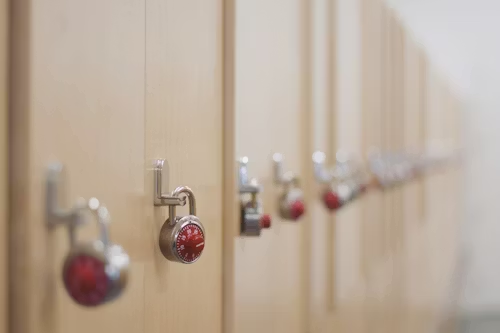
Combination Locks: Dial or digital combination locks
- No keys to manage
- Player-controlled access
- Easy to reset
Electronic Locks: Keypad or card-access systems
- Enhanced security
- Access control capabilities
- Audit trail options
Master Key Systems: Administrative access options
- Coaching staff master keys
- Facilities management access
- Emergency access capabilities
Our design process includes lock system consultation to help you choose the right security solution for your program’s needs.
Security Best Practices
Effective security balances protection with accessibility:
Player Security: Secure storage for personal items and equipment
Administrative Access: Master key systems for coaching staff
Emergency Access: Procedures for emergency situations
Key Management: Systems for key distribution and tracking
Our team works with your security requirements to design lock systems that protect equipment while maintaining accessibility.

Recruiting Impact & Facility Value
The Recruiting Game Has Changed
Here’s what recruiting looks like today: A top recruit visits five programs. They see five weight rooms, five training facilities, five stadiums. Additionally, they see five locker rooms.
When they walk into your locker room, they’re making a judgment. Is this program serious? Do they invest in their athletes? Is this somewhere I want to spend the next four years?
We’ve had coaches tell us their locker room is their number one recruiting tool. Not the stadium. Not the weight room. The locker room. Furthermore, that’s where recruits spend the most time during official visits. That’s where they take photos. That’s where they picture themselves playing.
Here’s what we’ve seen: Programs that invest in professional football locker room design see 30-40% higher official visit conversion rates. That’s not a guess—that’s what athletic directors tell us when we check in a year or two after installation.
Top recruits consistently rank facilities in their top 3 decision factors, according to NCAA research. Moreover, in today’s world, when a recruit posts a photo of your locker room on Instagram or TikTok, that content reaches thousands of potential future recruits. One program we worked with actually tracked it—their recruiting class ranking jumped 15 spots the year after they installed custom lockers.
The bottom line? Your football locker room design isn’t just storage. It’s a recruiting tool. Additionally, in competitive recruiting environments, that tool matters.
Social Media Value
In today’s recruiting environment, social media plays a crucial role. When recruits visit facilities, they take photos and videos to share on social media. Professional locker rooms generate positive social media content that extends recruiting value beyond official visits.
Social Media Benefits:
- Recruits share locker room photos on Instagram, Twitter, and TikTok
- Positive social media content reaches thousands of potential recruits
- Facility tours become shareable content for coaches and programs
- Professional facilities enhance program brand and reputation
Custom wood lockers with team branding, player names, and professional finishes create the visual content that drives social media engagement and recruiting success.
Facility Value & ROI
Professional locker facilities deliver measurable value beyond recruiting. They impact team culture, athlete satisfaction, and facility value.
Value Drivers:
- Team Culture: Professional facilities build team pride and identity
- Athlete Satisfaction: Better facilities improve athlete experience
- Facility Value: Professional lockers increase overall facility value
- Long-Term ROI: 15-20+ year lifespan delivers lasting value
Custom wood lockers represent a long-term investment that pays dividends in recruiting success, team culture, and facility value for 15-20+ years.
Football Locker Room Design Process & Timeline
Our 4-Phase Design Process
We’ve developed a proven 4-phase design process that ensures successful football locker room design projects. This systematic approach has helped hundreds of programs achieve their facility goals:
Phase 1: Discovery & Assessment (Weeks 1-2)
- Free custom design consultation
- Needs assessment and space evaluation
- Equipment requirements analysis
- Budget discussion and tier selection
- Timeline planning
Phase 2: Design & Specification (Weeks 2-4)
- 3D renderings and layout plans
- Detailed specifications and pricing
- Team branding design
- Color samples and material selection
- Design approval process
Phase 3: Fabrication (Weeks 4-12)
- Custom manufacturing in our Canadian facility
- Team branding application
- Player name engraving
- Quality control and inspection
- Progress updates throughout fabrication
Phase 4: Installation & Completion (Weeks 12-16)
- Shipping and delivery coordination
- Professional installation
- Final inspection and punch list
- Project completion and handoff
Total timeline: 10-16 weeks from order to completion, depending on project size and complexity.
Timeline Planning
Proper timeline planning ensures your football locker room project completes when needed. Key considerations include:
- Seasonal Timing: Complete before fall camp or season start
- Recruiting Calendar: Complete before official visit season
- Facility Availability: Coordinate with other facility projects
- Budget Cycles: Align with fiscal year and budget approval processes
We recommend starting the planning process 3-4 months before your target completion date to ensure adequate time for design, fabrication, and installation.
Budget Planning & Cost Considerations
Understanding Total Project Costs for Football Locker Room Design
Football locker room design projects involve more than just locker costs. Understanding all cost components helps you plan accurately:
Cost Components:
- Locker Costs: $449-$599 per locker (Varsity to Stadium tiers)
- Installation: $50-$150 per locker (varies by complexity)
- Shipping: $20-$50 per locker (depends on location and quantity)
- Site Preparation: $5,000-$20,000 (flooring, electrical, HVAC)
- Team Branding: Included in custom locker pricing
- Player Names: Included or minimal additional cost
- Contingency: 10-15% of total budget
Total Project Cost Example (100 Lockers, Varsity Tier):
- Lockers: $449 × 100 = $44,900
- Installation: $100 × 100 = $10,000
- Shipping: $30 × 100 = $3,000
- Site Preparation: $10,000
- Contingency (10%): $6,790
- Total Project Cost: $74,690
Our free custom design consultation includes detailed cost breakdowns to help you plan accurately.
Budget Optimization Strategies for Football Locker Room Design
Several strategies can optimize football locker room design budgets:
Phased Approach: Complete locker installation in phases, spreading costs over multiple budget cycles
Tier Selection: Use appropriate tiers (Varsity for most programs, Pro for premium facilities)
Space Optimization: Efficient layout design maximizes locker count within available space
Value Engineering: Identify cost-saving opportunities without compromising quality
Our design team works with you to optimize budgets while maintaining quality and functionality.
Common Design Mistakes to Avoid
Five Mistakes We See (And How to Avoid Them)
Mistake #1: Lockers That Are Too Small
We worked with a program that tried to save money by going with 18-inch wide lockers instead of 24-inch. Big mistake. Shoulder pads didn’t fit. Players were damaging equipment trying to force things in. They ended up having to replace half the lockers after two years.
Football equipment is big. Shoulder pads need 24 inches minimum. Helmets need proper ventilation. Therefore, don’t try to save a few bucks by going smaller—you’ll pay for it later. This is a critical consideration in football locker room design.
Mistake #2: Forgetting About Ventilation
This is the mistake that costs programs the most money. They design beautiful lockers, install them, and six months later they’re dealing with moldy equipment and a locker room that smells terrible.
Football equipment gets wet. Really wet. You need ventilation systems that can handle that. Additionally, plan for it upfront, or you’ll be retrofitting later (and that’s expensive). Proper ventilation is essential for successful football locker room design.
Mistake #3: Not Planning for Enough Space in Football Locker Room Design
We had a program that designed their locker room for 80 players. Then their roster grew to 100, and they were scrambling to fit everyone in. Cramped facilities, frustrated players, equipment everywhere.
Plan for growth. If you’ve got 80 players now, design for 100. Trust us on this one.
Mistake #4: Going Cheap Now, Paying More Later
Metal lockers cost less upfront. But they rust, they dent, and they need replacing after 10-12 years. Wood lockers cost more upfront, but they last 15-20+ years and don’t rust.
Look at total cost of ownership, not just initial price. Over 15 years, wood lockers actually cost less.
Mistake #5: Branding as an Afterthought
We’ve seen programs install plain lockers, then try to add branding later. It never looks as good, and it costs more. Plus, you miss the opportunity to create that “wow factor” for recruits.
Plan branding from the start. It’s easier, cheaper, and more effective.
Getting Started: Your Next Steps
Step 1: Schedule Free Consultation
Our free custom design consultation is the first step in your football locker room project. We’ll discuss your needs, evaluate your space, review equipment requirements, and provide initial recommendations.
What to Prepare:
- Space measurements and layout
- Roster size and equipment needs
- Budget range or constraints
- Timeline and target completion date
- Team branding guidelines
- Any specific requirements or priorities
Contact us through our website or call to schedule your free consultation. No obligation—we’re here to help you understand your options and make informed decisions.
Step 2: Review Design & Pricing
After the consultation, we’ll provide detailed designs, specifications, and pricing. Review these materials with your team and ask any questions you have.
Step 3: Approve Design & Place Order
Once you approve the design and pricing, we’ll begin fabrication. We’ll keep you updated throughout the process and coordinate installation when ready.
Step 4: Installation & Completion
Our professional installation team will install your custom lockers and ensure everything meets your expectations. We’ll complete a final inspection and address any punch list items.
Frequently Asked Questions
What are the standard dimensions for football lockers?
Football lockers require 24″ minimum width (30″ recommended for premium facilities) to accommodate shoulder pads and bulky equipment. Standard depth is 24″ (30″ for enhanced storage), and height is 72″ standard (84″ for tall lockers). These dimensions ensure adequate space for helmets, shoulder pads, cleats, uniforms, and protective gear. Our custom design process optimizes dimensions based on your specific space and equipment needs.
How much ventilation do football locker rooms need?
Football locker rooms require robust ventilation systems due to wet equipment and high humidity. Minimum requirements include 6-8 air changes per hour, proper exhaust systems for moisture removal, and ventilated locker compartments for equipment drying. Our custom lockers include ventilated compartments (helmet shelves, shoe storage, drawers) that work in conjunction with facility HVAC systems to ensure adequate ventilation throughout the space.
What team branding options are available for football lockers?
Custom wood lockers offer unlimited branding options: exact team color matching (unlimited colors, not limited to standards), integrated team logos (routed or engraved into wood, not decals), custom graphics and patterns, and team color hardware. All branding is permanent and integrated into the finish, ensuring it lasts 15-20+ years. Our design process includes comprehensive branding consultation to ensure your lockers reflect your program’s identity perfectly.
How do player names work on custom football lockers?
Player names can be applied using several methods: engraved directly into wood (permanent, professional appearance), engraved plates (metal or wood plates that can be updated), or integrated into locker design (seamless appearance). Names can be updated when rosters change, and our team works with you to choose the best method based on your update needs and preferences.
What’s the timeline for a football locker room project?
Typical timeline: 10-16 weeks from order to completion. This includes 2-4 weeks for design and approvals, 6-8 weeks for fabrication (including team branding and player names), and 2-4 weeks for shipping and installation. We recommend starting the planning process 3-4 months before your target completion date to ensure adequate time for all phases, especially if you need completion before fall camp or official visit season.
How much do custom football lockers cost?
Custom football lockers range from $449-$599 per locker depending on tier (Varsity $449, Pro $549, Stadium $599). Total project costs typically range from $60,000-$100,000 for 100 lockers, including lockers, installation, shipping, and site preparation. Team branding and player names are included in custom locker pricing. Our free custom design consultation includes detailed cost breakdowns to help you plan accurately.
How do custom football lockers impact recruiting?
Professional locker facilities significantly impact recruiting success. Programs with custom wood lockers featuring team branding report 30-40% higher official visit conversion rates. Top recruits consistently rank facilities among top 3 decision factors, and social media sharing of locker room tours generates significant recruiting value. Custom lockers create the “wow factor” that helps programs stand out in competitive recruiting environments and signal program commitment to athlete success.
What maintenance do custom football lockers require?
Custom wood lockers require minimal maintenance: weekly surface cleaning with mild cleaner, monthly deep cleaning and inspection, and annual comprehensive maintenance. Our modular repair system allows component-level repairs (replace individual doors or shelves for $50-$150) without replacing entire lockers, extending lifespan and reducing long-term costs. With proper maintenance, wood lockers last 15-20+ years, significantly longer than metal alternatives that require replacement after 10-12 years.
Look, designing a football locker room is a big decision. There are a lot of moving parts, a lot of people to keep happy, and a lot of money on the line. But you don’t have to figure it all out on your own.
We’ve been doing this for 30+ years. We’ve designed locker rooms for programs at every level, and we’ve learned what works and what doesn’t. We know how to accommodate all that football equipment. We know how to plan for ventilation. We know how to make branding that actually matters.
Ready to get started? Schedule your free custom design consultation. We’ll come out, look at your space, talk through your needs, and give you honest advice. No sales pitch, no pressure—just real guidance from people who’ve been doing this longer than most programs have been around.
Sometimes that conversation leads to a project. Sometimes it leads to us recommending you wait a year or two, or suggesting a different approach. Either way, you’ll walk away with better information than you had before. And in a project this big, that information is worth its weight in gold.