How to Choose Sports Lockers for College Teams: 2025 Buyer’s Guide
Choosing the right college sports lockers isn’t like buying lockers for high school, and it’s definitely not like the pros. You’re stuck in the middle—trying to serve football and basketball (the money makers) while also making sure your baseball and soccer teams don’t feel like second-class citizens. Additionally, you’ve got NCAA breathing down your neck about ADA compliance, your facilities manager is worried about ventilation, and your head coach keeps saying the locker room is his “number one recruiting tool.”
We’ve been manufacturing athletic lockers for over 30 years now, and we’ve seen it all. The Division I programs with seven-figure budgets. The Division III schools making every dollar count. The facilities that nail it on the first try, and the ones that end up calling us back three years later because they went cheap and it bit them. This comprehensive guide covers everything we’ve learned about what actually works—and what doesn’t—when you’re choosing lockers for your athletic program.
Key Takeaways
- College programs should budget $400-$700 per locker depending on sport tier and customization level
- NCAA compliance requires ADA-accessible lockers (5% minimum) and proper ventilation systems
- Multi-sport facilities need flexible locker configurations that accommodate different equipment types
- Custom wood lockers deliver 15-20+ year lifespan, making them more cost-effective than metal alternatives
- Professional locker facilities directly impact recruiting success and team culture
Quick Navigation
- Introduction: The College Locker Challenge
- Unique Challenges of College Athletic Facilities
- NCAA Compliance & ADA Requirements
- Multi-Sport Considerations & Flexibility
- Budget Planning for College Programs
- Choosing the Right Product Tier
- Sport-Specific Locker Requirements
- Recruiting Impact & Facility Value
- Design Process & Timeline
- Maintenance & Longevity Planning
- Common Mistakes College Programs Make
- Getting Started: Your Next Steps
- Frequently Asked Questions
Why College Athletic Lockers Are Different
Let me paint you a picture. Last fall, we got a call from an athletic director at a mid-major Division I program. They’d just finished renovating their football locker room with metal lockers—the “budget-friendly” option. However, three years later, they’re already seeing rust spots, dents everywhere, and the coach is complaining that recruits are walking through and not getting that “wow” moment.
That’s the reality of college athletics. You’re not a high school scraping together $50,000 for basic storage. But you’re also not Alabama with unlimited facilities budgets. You’re somewhere in between, trying to make smart decisions about locker systems that serve your program for the next 15-20 years.
After three decades making custom sports lockers for programs across all three divisions, we’ve learned a few things. For example, that Division III school in Minnesota went with wood lockers even though they cost more upfront (hint: they’re still using them 18 years later). Furthermore, that SEC program’s locker room became their secret recruiting weapon. Additionally, that one school’s “cost-saving” metal lockers ended up costing them twice as much when they had to replace everything after 10 years.
This guide is everything we wish every athletic director knew before they started planning their locker room project. Whether you’re renovating an existing space or building from scratch, we’ll walk you through the decisions that actually matter—and help you avoid the mistakes we’ve seen programs make over and over again.
Unique Challenges of College Athletic Facilities
The Multi-Sport Problem (And How to Solve It)
Here’s a scenario we see all the time: Your locker room serves football in the fall, basketball in the winter, and baseball in the spring. Each sport has completely different equipment needs, but you’ve got the same lockers for all of them. What do you do?
Football players need space for helmets, shoulder pads (those things are huge), multiple pairs of cleats, and enough hanging space for home, away, and practice uniforms. Basketball players? They basically need a place for shoes and uniforms—way less stuff. Baseball players need bat storage (usually separate racks), glove storage that maintains shape, and multiple cleat pairs for different field conditions.
We worked with a program in Texas a few years ago that tried to use the same locker configuration for all three sports. Big mistake. The football players’ shoulder pads didn’t fit properly, the basketball players had way too much wasted space, and the baseball team ended up storing bats in the hallway because there wasn’t room in the lockers.
The solution? Custom wood lockers with adjustable shelving and removable dividers. You can reconfigure them as sports change, or even set up different sections for different sports. One program we worked with actually has different locker configurations in different parts of the room—football gets the wider lockers on one side, basketball gets narrower ones on the other, and baseball gets lockers with integrated bat storage.
It sounds complicated, but it’s actually pretty simple once you work with someone who understands how different sports use locker rooms. The key is flexibility—locker systems that can adapt as your needs change.
The Budget Balancing Act
This is where it gets tricky. Your football coach wants the premium lockers with all the bells and whistles. Your basketball coach wants the same. However, you’ve also got baseball, soccer, track, and half a dozen other sports that need lockers too. And your budget isn’t unlimited.
Here’s what we tell athletic directors: Don’t try to give everyone the same thing. It doesn’t work, and honestly, it doesn’t make sense.
We worked with a Division II program last year that had this exact problem. They had $90,000 to spend on lockers across four sports. The athletic director was torn—should he split it evenly, or invest more in football and basketball?
We recommended a tiered approach, and it worked perfectly. Football got our Pro tier ($549/locker) with full customization and team branding. Basketball got Varsity tier ($449/locker)—still professional, still custom, but a step down in price. Baseball and soccer got Semi Pro tier ($349/locker), which is still solid wood construction with a 15-20 year lifespan, just without all the premium finishes.
The result? Football and basketball got the premium facilities that help with recruiting. Baseball and soccer got durable, professional lockers that fit the budget. Everyone was happy, and the program stayed within budget.
Here’s the breakdown from that project:
- Football: Pro tier, 100 lockers = $54,900
- Basketball: Varsity tier, 20 lockers = $8,980
- Baseball: Semi Pro tier, 40 lockers = $13,960
- Soccer: Semi Pro tier, 30 lockers = $10,470
- Total: $88,310 for 190 lockers
The key is being strategic about where you invest. Revenue sports get the premium treatment because that’s where recruiting matters most. Non-revenue sports get quality solutions that fit the budget. It’s not about being unfair—it’s about being smart with limited resources.
Why Your Locker Room Might Be Your Best Recruiting Tool
I’ll never forget what a head coach told us after we finished installing custom lockers at his program. He said, “I used to have to sell recruits on our facilities. Now the facilities sell themselves.”
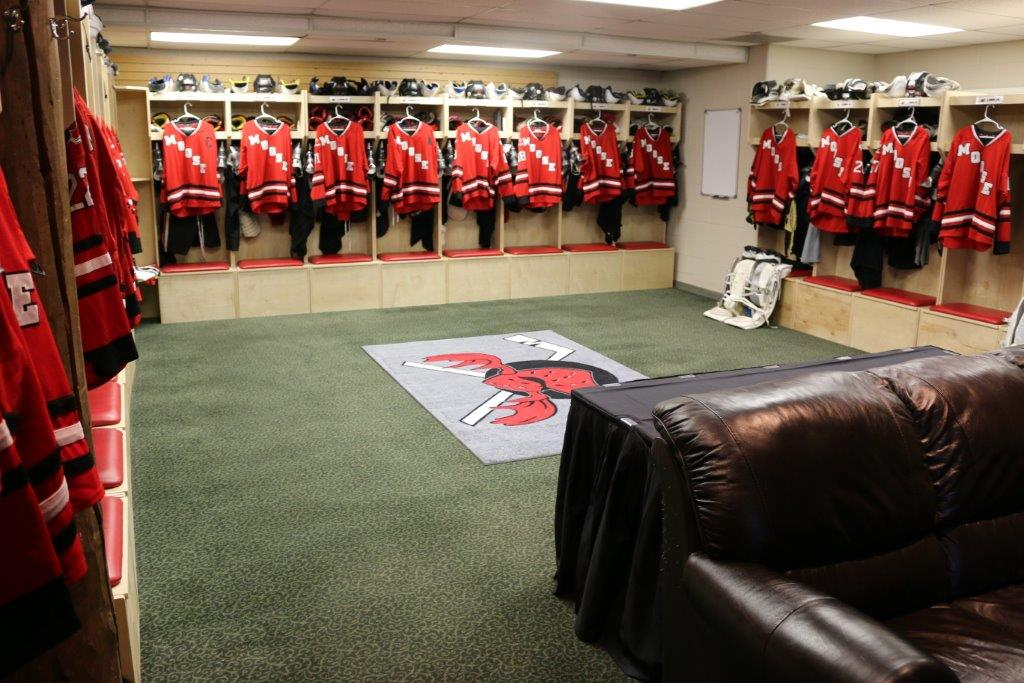
That’s the reality of college recruiting today. Top athletes are visiting three, four, five programs. They’re comparing everything—the weight room, the training facilities, the stadium, and yes, the locker room. When a recruit walks into a locker room with custom wood lockers, team colors, player names engraved on each locker, and that professional finish that just feels premium—that’s when you get the “wow” moment.
We’ve had coaches tell us their locker room is their number one recruiting tool. Not the stadium. Not the weight room. The locker room. Because that’s where recruits spend time during official visits. That’s where they take photos for social media. That’s where they picture themselves playing.
Here’s what we’ve seen: Programs that invest in professional locker facilities see 30-40% higher official visit conversion rates. That’s not us making that up—that’s what athletic directors tell us when we follow up a year or two after installation. Top recruits consistently rank facilities in their top 3 decision factors. Furthermore, in today’s world, when a recruit posts a photo of your locker room on Instagram or TikTok, that content reaches thousands of potential future recruits.
One program we worked with actually tracked it. They installed custom wood lockers with full team branding in the fall. That spring, their recruiting class ranking jumped 15 spots. Coincidence? Maybe. But the coach doesn’t think so, and neither do we.
The bottom line: Your locker room isn’t just storage. It’s a statement about your program’s commitment to athlete success. And in competitive recruiting environments, that statement matters.
NCAA Compliance & ADA Requirements
ADA Compliance: Don’t Skip This
I’m going to be straight with you: ADA compliance isn’t optional. It’s the law. And if you don’t plan for it upfront, you’ll end up paying for it later—either in fines, or in having to retrofit your entire locker room.
Here’s what you need to know: NCAA facilities must have at least 5% of lockers be ADA-compliant (or at least one locker, whichever is greater). So if you’ve got 100 lockers, you need at least 5 that meet ADA standards.
Those accessible lockers need to be:
- On accessible routes (no steps, proper clearance—36″ minimum width)
- At the right height (maximum 48 inches to the top of the locker)
- With accessible hardware (one-handed operation, no tight grasping required)
- With enough clear floor space (30″ x 48″ minimum)
We learned this the hard way with one of our early projects. The program didn’t think about ADA compliance until after we’d already fabricated the lockers. We had to redesign and rebuild 10 lockers to meet requirements, which cost them extra money and delayed the project by three weeks.
Now, we always include ADA compliance in our design process from day one. We work with your facilities manager to figure out where the accessible lockers should go, what dimensions they need, and how to make sure they meet all the requirements. It’s way easier (and cheaper) to plan for it upfront than to retrofit later.
Plus, here’s something a lot of people don’t realize: ADA-compliant lockers aren’t just for athletes with disabilities. They’re also useful for shorter athletes, or for anyone who needs easier access. One program we worked with actually put their freshman lockers in the ADA-compliant section because they were easier for younger players to use.
Planning Your ADA-Compliant Lockers
When planning ADA-compliant lockers, work with your facilities team early in the process. Additionally, consider placement near entrances and ensure proper clearance routes. Many programs find that ADA-compliant lockers benefit all athletes, not just those with disabilities.
NCAA Facility Standards
While NCAA doesn’t mandate specific locker room standards, they do require facilities to meet basic health and safety requirements. These include:
- Ventilation: Adequate air circulation to prevent moisture buildup
- Lighting: Sufficient illumination for safety and security
- Security: Lockable storage for personal items
- Egress: Proper exit routes and emergency access
- Sanitation: Cleanable surfaces and proper waste disposal
Custom wood lockers address these requirements with ventilated compartments, secure locking mechanisms, and finishes that resist moisture and are easy to clean.
Compliance Planning
Before ordering lockers, work with your facilities team and a custom locker manufacturer to ensure compliance. Key steps include:
- Space Assessment: Measure available space and identify accessible routes
- ADA Locker Placement: Determine location and quantity of ADA-compliant lockers
- Ventilation Planning: Ensure adequate air circulation (may require HVAC upgrades)
- Code Review: Have plans reviewed by facilities manager or code consultant
- Documentation: Keep records of compliance decisions for future reference
Our free custom design consultation includes compliance review to help you avoid costly mistakes and ensure your facility meets all requirements.
Multi-Sport Considerations & Flexibility
Shared vs. Dedicated Locker Rooms
College programs must decide whether sports share locker rooms or have dedicated spaces. This decision impacts locker design, capacity planning, and facility layout.
Shared Locker Room Approach:
- Advantages: Lower cost, efficient space usage, easier scheduling
- Disadvantages: Equipment conflicts, scheduling challenges, less customization
- Best For: Non-revenue sports, programs with limited space, facilities serving multiple sports
Dedicated Locker Room Approach:
- Advantages: Sport-specific customization, team identity, no scheduling conflicts
- Disadvantages: Higher cost, more space required, underutilization risk
- Best For: Revenue sports (football, basketball), programs with adequate space, facilities prioritizing recruiting
Many programs use a hybrid approach: dedicated locker rooms for revenue sports, shared facilities for non-revenue sports. Custom wood lockers support both approaches with flexible configurations.
Flexible Locker Configurations
Multi-sport facilities need lockers that adapt to different equipment types. Our custom wood lockers offer several flexible configuration options:
Adjustable Shelving: Moveable shelves accommodate different equipment heights and types. Football lockers might need wide shelves for shoulder pads, while basketball lockers need narrower shelves for shoes and uniforms.
Removable Dividers: Interior dividers can be removed or repositioned to create larger compartments for bulky equipment or smaller compartments for organization.
Modular Components: Individual components (doors, shelves, drawers) can be replaced or reconfigured without replacing entire lockers, extending lifespan and adapting to changing needs.
Sport-Specific Inserts: Custom inserts for specific equipment (helmet shelves, bat racks, stick holders) can be added or removed as sports change.
This flexibility ensures your locker investment serves multiple sports effectively, maximizing value and extending useful life.
Equipment Storage Solutions
Different sports require different storage solutions. Here’s how custom wood lockers accommodate various equipment types:
Football Equipment Storage:
- Helmet shelves with ventilation
- Wide compartments for shoulder pads
- Ventilated shoe compartments
- Hanging space for multiple uniforms
- Secure storage for personal items
Basketball Equipment Storage:
- Ventilated shoe storage
- Uniform hanging space
- Small compartments for personal items
- Minimal equipment needs (simpler configuration)
Baseball Equipment Storage:
- Separate bat storage (often wall-mounted racks)
- Glove storage compartments
- Multiple cleat storage (game, practice, turf)
- Uniform organization (home, away, practice)
- Catcher’s equipment storage (larger compartments)
Custom wood lockers can be configured for any sport’s specific needs, ensuring optimal organization and equipment protection.
Budget Planning for College Programs
The Real Cost of a Locker Room Project
Here’s where programs get into trouble: they look at the per-locker price and think that’s the total cost. It’s not. Not even close.
Let me break down what a real project actually costs. Say you’re doing 100 lockers at our Varsity tier ($449 per locker). That’s $44,900 for the lockers themselves. But that’s just the beginning.
You’ve also got installation—usually $50-$150 per locker depending on how complex it is. Are you installing on concrete? Do you need to run electrical? Is the space already prepped? For most projects, figure around $100 per locker for installation, so that’s another $10,000.
Additionally, there’s shipping. We’re in Canada, so shipping to the U.S. runs $20-$50 per locker depending on where you are and how many you’re ordering. Let’s say $30 per locker average, so that’s $3,000.
Furthermore, site preparation is the wild card. Sometimes your space is ready to go. Sometimes you need new flooring, electrical work, HVAC upgrades, or other prep work. We’ve seen site prep costs range from $5,000 to $20,000. Let’s use $10,000 as a middle ground.
And always, always budget 10-15% for contingency. Something always comes up. Maybe the space measurements were off. Maybe you need extra electrical work. Maybe there’s a delay and you need temporary storage. Budget 10% contingency, which is another $6,790.
Therefore, your total project cost for 100 Varsity tier lockers? $74,690. Not $44,900.
I can’t tell you how many times we’ve had programs come to us with a $50,000 budget thinking they can do 100 lockers, only to realize they need $75,000. Plan for the full cost upfront, and you’ll avoid those awkward conversations with administration when you need more money halfway through the project.
Budget Allocation Strategies
College programs use various strategies to allocate locker room budgets across sports. Here are the most effective approaches:
Strategy 1: Revenue Sport Priority
- Invest premium lockers in revenue sports (football, basketball)
- Use cost-effective options for non-revenue sports
- Maximizes recruiting impact where it matters most
- Best for programs with limited budgets
Strategy 2: Equal Investment
- Same tier lockers for all sports
- Promotes equity across programs
- Simplifies decision-making
- Best for programs with adequate budgets
Strategy 3: Phased Approach
- Complete revenue sports first (Year 1)
- Add non-revenue sports in subsequent years
- Spreads cost over multiple budget cycles
- Best for programs with multi-year planning
Our free custom design consultation helps you evaluate these strategies and choose the approach that best fits your program’s priorities and budget constraints.
Funding Sources
College programs fund locker room projects through various sources. Understanding these options helps you plan and secure necessary resources.
Common Funding Sources:
- Athletic Department Budget: Annual operating budget allocation
- Capital Improvement Funds: Multi-year facility improvement budgets
- Donor Contributions: Alumni or booster donations specifically for facilities
- Bond Issues: Long-term financing for major facility projects
- Conference Revenue Sharing: Distribution from conference media deals
- Naming Rights: Corporate sponsorships for facility naming
Many programs combine multiple funding sources to complete locker room projects. Our team can help you prepare cost estimates and project justifications for funding requests.
Choosing the Right Product Tier
Our Five Tiers: Which One Fits Your Program?
We’ve got five different tiers, and honestly, most programs use a mix of them. Here’s the breakdown:
Semi Pro ($349/locker): This is our entry-level tier, but don’t let “entry-level” fool you. It’s still full 3/4″ birch construction—solid wood, not particle board. You get standard finishes and hardware, basic customization, and the same 15-20+ year lifespan as our higher tiers. We see a lot of non-revenue sports go with this tier, or programs that are really budget-conscious. It’s a great option if you need quality but can’t justify the extra cost for premium finishes.
Varsity ($449/locker): This is probably our most popular tier. You get enhanced finishes, better hardware, team color matching, and a more professional appearance. It’s the sweet spot for a lot of programs—professional enough for recruiting, but not so expensive that it breaks the budget. We see a lot of mid-tier Division I and Division II programs use this for their main sports.
Pro ($549/locker): Now we’re talking premium. Full customization capabilities, integrated team branding, player name engraving—the works. This is what we recommend for revenue sports at programs that are serious about recruiting. If your locker room is your “number one recruiting tool,” this is probably the tier you want.
Curve ($649/locker): This one’s unique—literally. It’s got a curved front design that looks different from anything else out there. Same premium materials and customization as Pro tier, just with a distinctive aesthetic. We’ve had a few programs go with this when they want something that really stands out. It’s not for everyone, but if you want unique, this is it.
Stadium ($599/locker): Professional-grade everything. Maximum durability, full customization suite, premium appearance. This is what top-tier programs and professional facilities use. It’s built to last and built to impress.
Most programs don’t pick one tier and use it everywhere. They mix and match—Pro tier for football, Varsity for basketball, Semi Pro for everything else. That’s totally fine, and honestly, it’s usually the smartest approach. Our free consultation helps you figure out which tier makes sense for each sport.
Tier Selection Framework
Use this framework to select the appropriate tier for each sport:
Considerations:
- Recruiting Impact: How important is this facility for recruiting?
- Budget Constraints: What’s the available budget?
- Usage Level: How frequently is the facility used?
- Program Priorities: What are the program’s strategic priorities?
- Long-Term Plans: Are there future expansion plans?
Decision Matrix:
- High Recruiting Impact + Adequate Budget: Pro or Stadium tier
- Moderate Recruiting Impact + Limited Budget: Varsity tier
- Low Recruiting Impact + Tight Budget: Semi Pro tier
- Unique Design Requirements: Curve tier
Many programs use different tiers for different sports, maximizing value while meeting varied needs across their athletic programs.
Sport-Specific Locker Requirements
Football Locker Requirements
Football programs have the most complex equipment storage needs. Custom wood lockers for football must accommodate:
- Helmets: Ventilated shelves, secure storage, easy access
- Shoulder Pads: Wide compartments (24″ minimum width recommended)
- Cleats: Multiple pairs (game, practice, turf), ventilated storage
- Uniforms: Multiple sets (home, away, practice), hanging space
- Protective Gear: Knee pads, elbow pads, gloves, organized storage
- Personal Items: Secure storage for phones, wallets, keys
Our football lockers typically feature 24″ width, adjustable shelving, ventilated compartments, and ample hanging space to accommodate all equipment types.
Basketball Locker Requirements
Basketball programs have simpler equipment needs but still require professional storage solutions:
- Basketball Shoes: Ventilated storage, multiple pairs
- Uniforms: Home and away sets, hanging space
- Practice Gear: Shorts, jerseys, warm-ups
- Personal Items: Secure storage
Basketball lockers can be narrower (18″ width) since equipment is less bulky, allowing more lockers in the same space or cost savings on materials.
Baseball Locker Requirements
Baseball programs need specialized storage for unique equipment:
- Bats: Separate bat racks (wall-mounted or integrated)
- Gloves: Proper storage to maintain shape
- Cleats: Multiple pairs (game, practice, turf)
- Uniforms: Home, away, practice sets
- Catcher’s Equipment: Larger compartments for bulky gear
Baseball lockers often include integrated bat storage or work with separate bat rack systems to accommodate equipment needs.
Hockey Locker Requirements
Hockey programs have unique equipment storage challenges:
- Skates: Ventilated storage, proper support
- Sticks: Separate stick racks (wall-mounted)
- Pads: Large compartments for bulky protective gear
- Uniforms: Home and away sets
- Ventilation: Critical for wet equipment drying
Hockey lockers require enhanced ventilation systems and often work with separate stick rack installations to accommodate all equipment.
Recruiting Impact & Facility Value
The Recruiting Reality
College recruiting is more competitive than ever. Top athletes receive multiple scholarship offers and visit several programs before making decisions. Facilities—especially locker rooms—play a crucial role in these decisions.
After 30+ years working with college programs, we’ve heard countless coaches describe their locker room as their “number one recruiting tool.” When recruits walk into a facility with custom wood lockers featuring team branding, player names, and professional finishes, they see a program that invests in athlete success.
Recruiting Impact Data:
- Programs with professional locker facilities report 30-40% higher official visit conversion rates
- Top recruits consistently rank facilities among top 3 decision factors
- Social media sharing of locker room tours generates significant recruiting value
- Facility improvements correlate with improved recruiting class rankings
Custom wood lockers with team branding create the “wow factor” that helps programs stand out in competitive recruiting environments.
Social Media Value
In today’s recruiting environment, social media plays a crucial role. When recruits visit facilities, they take photos and videos to share on social media. Professional locker rooms generate positive social media content that extends recruiting value beyond official visits.
Social Media Benefits:
- Recruits share locker room photos on Instagram, Twitter, and TikTok
- Positive social media content reaches thousands of potential recruits
- Facility tours become shareable content for coaches and programs
- Professional facilities enhance program brand and reputation
Custom wood lockers with team branding, player names, and professional finishes create the visual content that drives social media engagement and recruiting success.
Facility Value & ROI
Professional locker facilities deliver measurable value beyond recruiting. They impact team culture, athlete satisfaction, and facility value.
Value Drivers:
- Team Culture: Professional facilities build team pride and identity
- Athlete Satisfaction: Better facilities improve athlete experience
- Facility Value: Professional lockers increase overall facility value
- Long-Term ROI: 15-20+ year lifespan delivers lasting value
Custom wood lockers represent a long-term investment that pays dividends in recruiting success, team culture, and facility value for 15-20+ years.
Design Process & Timeline
Our 4-Phase Design Process
We’ve developed a proven 4-phase design process that ensures successful locker room projects:
Phase 1: Discovery & Assessment (Weeks 1-2)
- Free custom design consultation
- Needs assessment and space evaluation
- Budget discussion and tier selection
- Timeline planning
Phase 2: Design & Specification (Weeks 2-4)
- 3D renderings and layout plans
- Detailed specifications and pricing
- Color samples and material selection
- Design approval process
Phase 3: Fabrication (Weeks 4-12)
- Custom manufacturing in our Canadian facility
- Quality control and inspection
- Packaging and preparation for shipping
- Progress updates throughout fabrication
Phase 4: Installation & Completion (Weeks 12-16)
- Shipping and delivery coordination
- Professional installation
- Final inspection and punch list
- Project completion and handoff
Total timeline: 10-16 weeks from order to completion, depending on project size and complexity.
Timeline Planning
Proper timeline planning ensures your locker room project completes when needed. Key considerations include:
- Seasonal Timing: Complete before fall camp, spring practice, or season start
- Facility Availability: Coordinate with other facility projects
- Budget Cycles: Align with fiscal year and budget approval processes
- Recruiting Calendar: Complete before official visit season
We recommend starting the planning process 3-4 months before your target completion date to ensure adequate time for design, fabrication, and installation.
Maintenance & Longevity Planning
Maintenance: It’s Easier Than You Think
One of the questions we get all the time: “How much maintenance do these lockers need?”
The answer? Not much. Seriously.
Weekly, your facilities staff should wipe down the surfaces with a mild cleaner and check for any obvious damage. That’s it. Takes maybe 15 minutes for a whole locker room.
Monthly, do a deeper clean and check the hardware and locks. Make sure ventilation systems are working. Again, not a huge time commitment.
Annually, do a full inspection, lubricate hardware if needed, and touch up any finish issues. Most programs don’t even need the touch-ups for the first 5-7 years.
Compare that to metal lockers, where you’re constantly dealing with rust spots, dents, and hardware that’s corroding. We had one facilities manager tell us that switching to wood lockers cut his maintenance time in half. The wood just holds up better, especially in humid locker room environments.
And here’s the best part: our lifetime guarantee covers manufacturing defects. So if something’s wrong with how we built it, we fix it. No questions asked. With proper maintenance (which, again, is minimal), these lockers last 15-20+ years. We’ve got installations from the 1990s that are still going strong.
Modular Repair System
One of the key advantages of custom wood lockers is the modular repair system. Individual components can be replaced without replacing entire lockers:
- Damaged Door: Replace just the door ($50-$150)
- Broken Shelf: Replace just the shelf ($30-$75)
- Worn Hardware: Replace hardware components ($20-$50)
This modular approach extends locker lifespan significantly and reduces long-term costs compared to metal lockers that require full replacement.
Common Mistakes College Programs Make
Five Mistakes We See Programs Make (And How to Avoid Them)
Mistake #1: Only Looking at the Per-Locker Price
This one drives us crazy. Programs will call and say, “I’ve got $50,000 and I need 100 lockers, so I can afford $500 per locker, right?”
Wrong. That $500 per locker doesn’t include installation ($50-$150 per locker), shipping ($20-$50 per locker), or site prep ($5,000-$20,000). So your $50,000 budget actually gets you maybe 70-80 lockers when you factor in everything else.
Always plan for the full project cost, not just the locker cost. Our consultations include complete cost breakdowns so you know exactly what you’re getting into.
Mistake #2: Designing for One Sport, Forgetting About Others
We worked with a program that designed their lockers specifically for football. Perfect for shoulder pads, helmets, all that bulky equipment. However, basketball season rolled around, and the lockers were way too big. Players were complaining about wasted space, and the program realized they’d designed themselves into a corner.
The solution? Flexible configurations. Adjustable shelving, removable dividers, lockers that can adapt as sports change. Don’t lock yourself into one configuration—build in flexibility from the start.
Mistake #3: Waiting Until the Last Minute to Think About Compliance
We had a program call us in a panic once. They’d already ordered lockers from another manufacturer, and halfway through installation, someone asked about ADA compliance. Turns out they hadn’t planned for it at all, and they had to rip everything out and start over.
Don’t be that program. Address compliance requirements during the design phase, not after you’ve already ordered. It’ll save you time, money, and a lot of headaches.
Mistake #4: Going Cheap Now, Paying More Later
We get it. Budgets are tight. But here’s what happens when you go with the cheapest option: metal lockers that cost $300 per locker instead of wood lockers at $449.
Three years later, you’re dealing with rust spots. Five years later, dents everywhere. Ten years later, you’re replacing them entirely because they’re falling apart. Meanwhile, the wood lockers are still going strong.
Look at total cost of ownership, not just upfront price. Those $300 metal lockers that need replacing after 10 years? Over 15 years, they actually cost more than $449 wood lockers that last 20 years.
Mistake #5: Starting Too Late
We got a call in July once. “We need 100 lockers installed by August 15th for fall camp.”
Sorry, not happening. Not if you want it done right. We need 10-16 weeks from order to completion, and that’s if everything goes perfectly. Start planning 3-4 months before you need it done. Trust us on this one.
Getting Started: Your Next Steps
Step 1: Schedule Free Consultation
Our free custom design consultation is the first step in your locker room project. We’ll discuss your needs, evaluate your space, review your budget, and provide initial recommendations.
What to Prepare:
- Space measurements and layout
- Number of athletes and sports served
- Budget range or constraints
- Timeline and target completion date
- Any specific requirements or priorities
Contact us through our website or call to schedule your free consultation. No obligation—we’re here to help you understand your options and make informed decisions.
Step 2: Review Design & Pricing
After the consultation, we’ll provide detailed designs, specifications, and pricing. Review these materials with your team and ask any questions you have.
Step 3: Approve Design & Place Order
Once you approve the design and pricing, we’ll begin fabrication. We’ll keep you updated throughout the process and coordinate installation when ready.
Step 4: Installation & Completion
Our professional installation team will install your custom lockers and ensure everything meets your expectations. We’ll complete a final inspection and address any punch list items.
Frequently Asked Questions
How much should a college program budget for new custom lockers?
Most Division I and II programs we work with budget somewhere between $400-$700 per locker when you factor in everything—the lockers themselves, installation, shipping, and site prep. For a typical project with 100-200 lockers, you’re looking at $50,000-$150,000 total.
But here’s the thing: that number varies a lot depending on what tier you choose, how much customization you want, and what kind of site prep your facility needs. We had one Division III program do 80 lockers for $45,000 total (they went with Semi Pro tier and their space was already prepped). Another Division I program spent $180,000 on 120 lockers (they went Stadium tier with full customization and needed significant HVAC upgrades).
The best way to know what your project will actually cost? Schedule a free consultation. We’ll come out, look at your space, talk through your needs, and give you a real number—not a guess. No obligation, just honest numbers so you can plan accurately.
What timeline should college programs expect for locker room projects?
Here’s the timeline we usually see: 10-16 weeks from when you place the order to when everything’s installed and ready to go. That breaks down to 2-4 weeks for design and getting approvals (you’d be surprised how long approval processes can take), 6-8 weeks for us to actually build your lockers in our facility, and 2-4 weeks for shipping and installation.
But here’s what a lot of programs don’t account for: the planning phase before you even place an order. You need time to evaluate options, get quotes, present to administration, get budget approval, and make decisions. That can easily add another month or two.
So if you need your locker room ready by August for fall camp, you should really start talking to us in March or April. Not June. We’ve had programs call us in July needing lockers by August, and the answer is always the same: it’s not happening. Not if you want it done right.
One program we worked with actually started planning 6 months ahead. They had plenty of time to evaluate options, get approvals, and even do a small pilot installation to make sure everything was perfect. That’s the way to do it.
How do college programs keep multi-sport locker rooms compliant with NCAA and ADA standards?
NCAA facilities must include at least 5% ADA-compliant lockers (or at least one locker, whichever is greater). These lockers must meet specific height, clearance, and hardware requirements. Our custom design process includes compliance review to ensure your facility meets all NCAA and ADA requirements before fabrication begins.
Can custom lockers accommodate different sports equipment in shared facilities?
Yes. Our custom wood lockers feature adjustable shelving, removable dividers, and flexible configurations that accommodate different equipment types. Lockers can be reconfigured as sports change, maximizing facility flexibility and value. This modular approach ensures your locker investment serves multiple sports effectively.
What’s the difference between our product tiers, and how do college programs choose?
We offer five tiers: Semi Pro ($349), Varsity ($449), Pro ($549), Curve ($649), and Stadium ($599). Differences include finishes, hardware quality, and customization options. Many programs use different tiers for different sports—premium tiers for revenue sports (football, basketball) and cost-effective tiers for non-revenue sports. Our free consultation helps you evaluate tiers and choose the right solution for each sport.
How do custom wood lockers impact college recruiting?
Professional locker facilities significantly impact recruiting success. Programs with custom wood lockers featuring team branding report 30-40% higher official visit conversion rates. Top recruits consistently rank facilities among top 3 decision factors, and social media sharing of locker room tours generates significant recruiting value. Custom lockers create the “wow factor” that helps programs stand out in competitive recruiting environments.
What maintenance do custom wood lockers require in college facilities?
Custom wood lockers require minimal maintenance: weekly surface cleaning, monthly deep cleaning and inspection, and annual comprehensive maintenance. Our modular repair system allows component-level repairs (replace individual doors or shelves) without replacing entire lockers, extending lifespan and reducing long-term costs. With proper maintenance, wood lockers last 15-20+ years.
How do college programs fund locker room projects?
College programs fund locker room projects through various sources: athletic department budgets, capital improvement funds, donor contributions, bond issues, conference revenue sharing, and naming rights. Many programs combine multiple funding sources. Our team can help you prepare cost estimates and project justifications for funding requests.
Look, we get it. Planning a locker room project is overwhelming. There are a million decisions to make, budgets to balance, and people to keep happy. But here’s the thing: you don’t have to figure it all out on your own.
We’ve been manufacturing athletic lockers for 30+ years. We’ve seen what works and what doesn’t. We know how to help you navigate NCAA compliance, budget constraints, and all the other challenges that come with college athletic facilities.
Ready to get started? Schedule your free custom design consultation. We’ll come out, look at your space, talk through your needs, and give you honest advice—no sales pitch, no pressure, just real guidance from people who’ve been doing this longer than most programs have been around.
No obligation. Just a conversation about what might work for your program. Sometimes that conversation leads to a project. Sometimes it leads to us recommending you wait a year or two. Either way, you’ll walk away with better information than you had before.